

About
FOUNDER’S WORDS
“From global learning to local action—standing with people in dignity, resilience, and hope”
— Lenen Rahaman, the founder and Executive Director of MATI
The foundation of MATI and my long journey of working alongside people living in poverty have given me a deep and lasting insight into the immense potential of human beings. I have witnessed how families, despite living with multiple hardships, continue to survive, struggle, and move forward without losing hope. This strength—the ability to live with dignity amid discomfort at every step—is one of the most powerful yet least recognized human capacities.
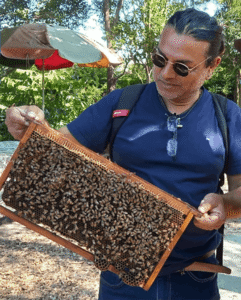 Throughout my work, I have witnessed extreme weather events of alarming scale and severity—record-breaking floods, environmental degradation, and both natural and man-made disasters. Climate change is no longer a distant concept; it is a lived reality. Its consequences—food insecurity, disease, forced migration, conflict, and economic instability—affect everyone, but people living in poverty suffer the most.
While resilience and adaptation are often promoted as solutions, they are not sufficient on their own. Poverty is deeply connected to structural factors such as housing conditions, access to decent work, healthcare, food security, education, and financial stability. These challenges exist globally, though in different forms. In Bangladesh, a strong and inclusive social security system led by the government is essential. NGO work alone cannot replace state responsibility. Development work that depends continuously on aid from the wealthier parts of the world risks reinforcing dependency rather than dismantling it.
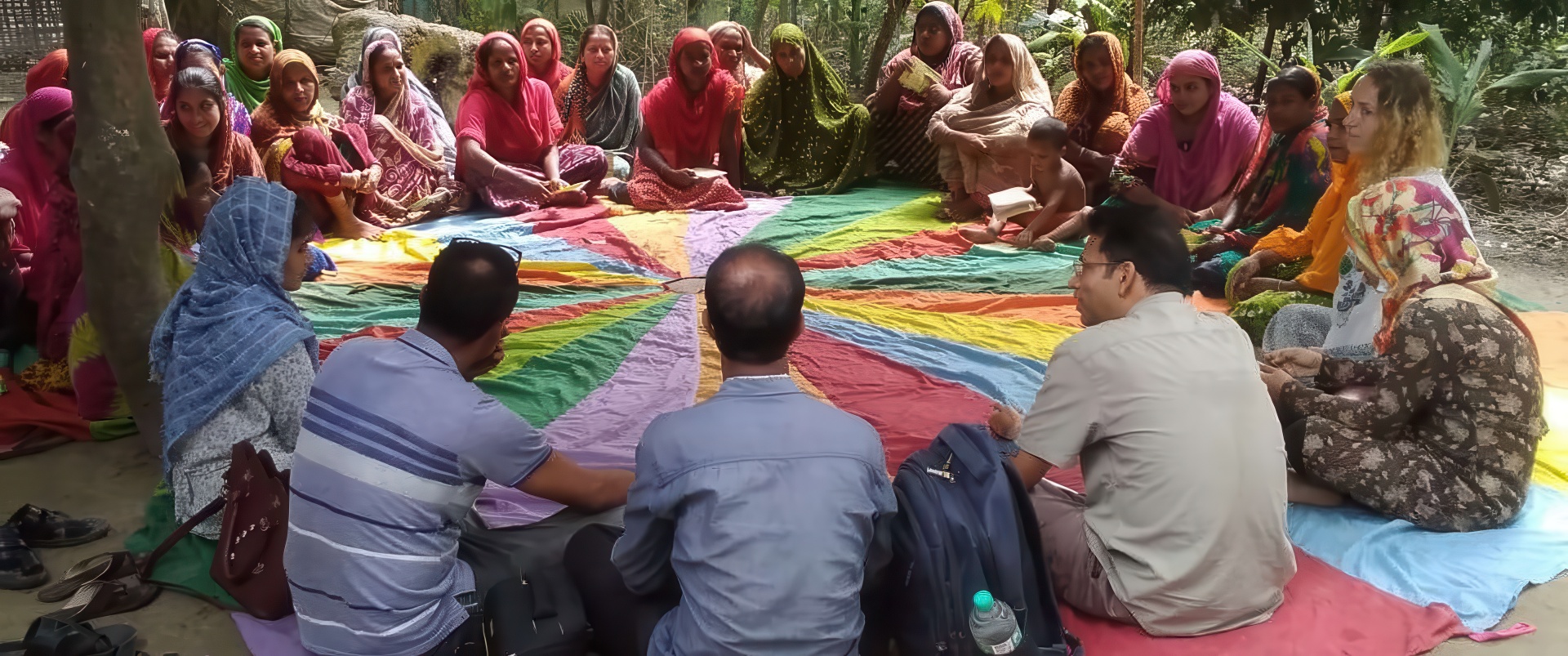
At MATI, we believe that development must be inclusive, participatory, and people-led. Encouraging meaningful participation of people living in poverty—by involving them in the design, planning, and decision-making of policies and programs—is not optional; it is essential. This is a learning journey for all of us in the development sector, including MATI. Development is not something done for the people, but with the people.
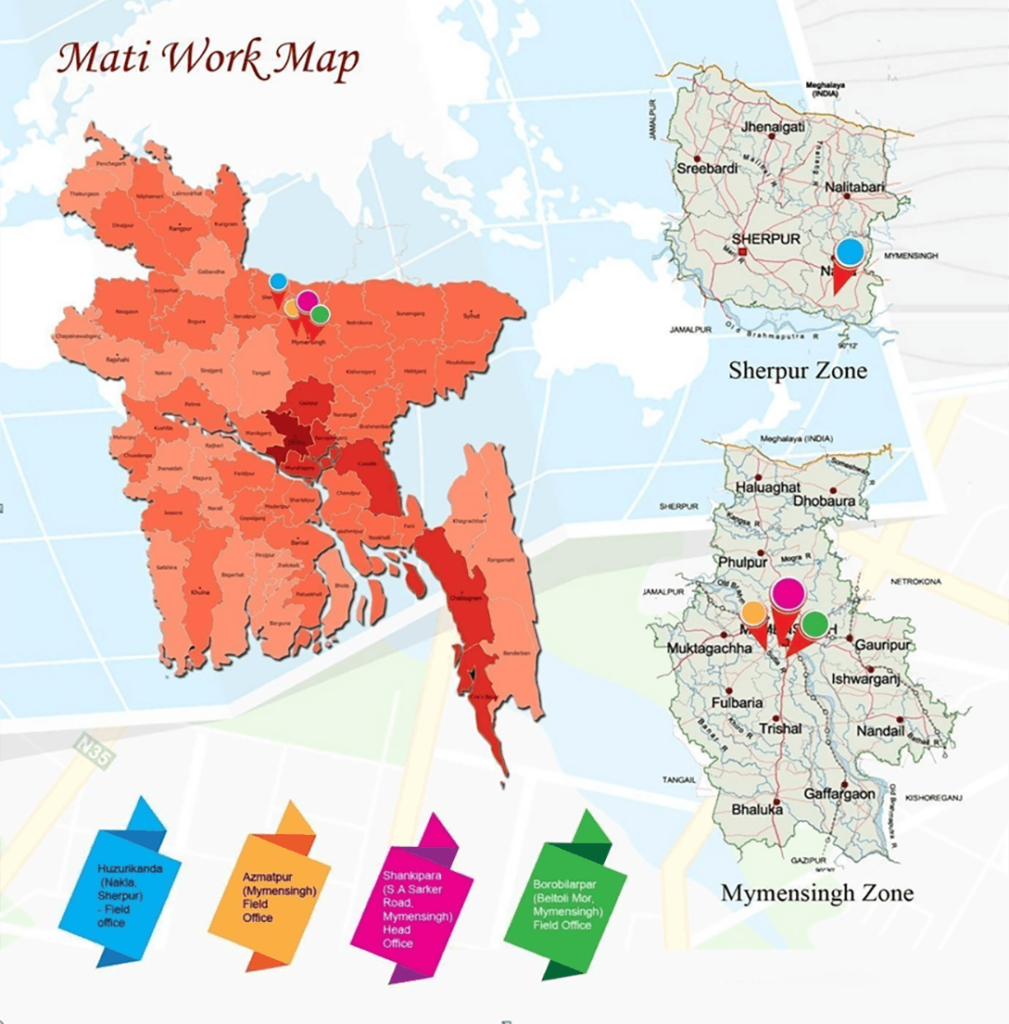
My own journey reflects this belief. I studied civil and environmental engineering in Germany, where I gained technical knowledge, discipline, and a deep understanding of sustainable systems. At the same time, my heart remained connected to Bangladesh. We started our first project in Huzurikanda village, Nakla, Sherpur in 1997 when I was studying and then working in Germany. In 2005, I returned from Germany with a clear commitment: to dedicate my life to working with people, communities, and nature through MATI. My education, combined with grassroots experience, shaped MATI’s approaches and programs—where global knowledge meets local realities.
MATI’s work has always been strengthened by partnerships—especially with friends, organizations, and supporters from Germany and other parts of the world who love Bangladesh and believe in justice, dignity, and shared responsibility. Development is both global and local: global in its challenges and solidarity, but deeply local in its practical solutions. Real change happens in the villages, households, cooperatives, and communities.
As we move forward, our focus is to contribute as meaningfully as possible to achieving the Sustainable Development Goals (SDGs) before the 2030 deadline—through ecological responsibility, social justice, community empowerment, and human dignity.
I am grateful to all our development partners, community members, staff, government and local authorities, NGO Affairs Bureau (NGOAB), Department of Social Services, local administrations, city corporation leaders, and all other stakeholders for their continued trust and support. Our journey continues with learning, humility, and hope.
I wish for a future where development serves humanity, where solidarity replaces exploitation, and where positive transformation reaches every corner of the world—for the well-being of humankind and the planet we share.
Lenen Rahaman
Founder & Executive Director
MATI
OUR BELIEFS
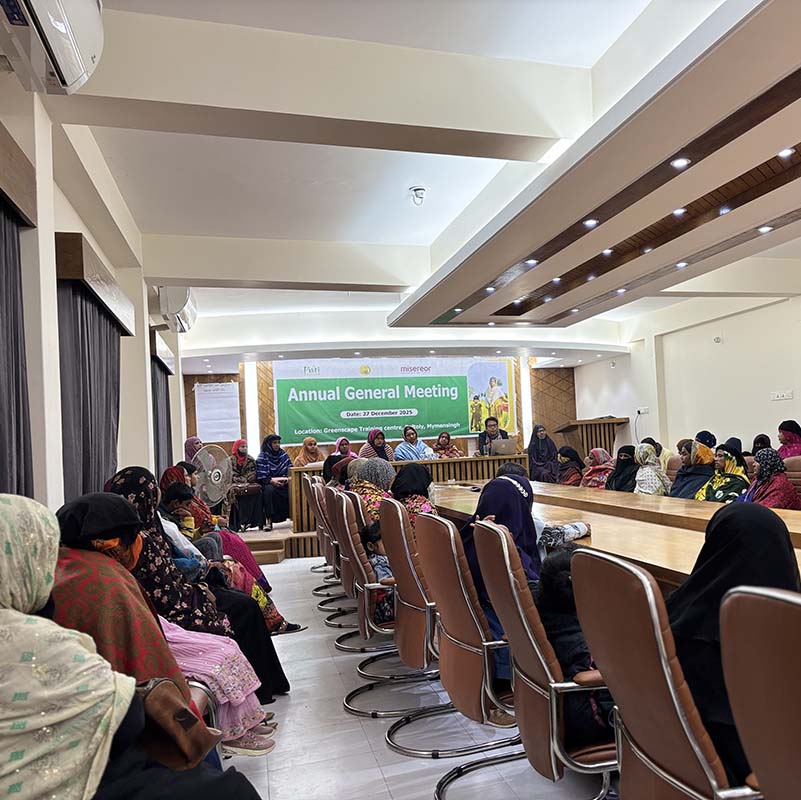
We strongly believe in a universal right to a life in dignity for all human beings. Through all our actions we do our best to reflect the principles of equality, fairness, democracy, good governance and human rights. Conflicts have to be solved solely through peaceful means. We see an intact ecosystem as a prerequisite for a successful, sustainable development and the well-being of all people. Ever since the beginning of MATI’s work, we have put all our good faith and effort – together with our partners on local, national and international level – towards the realization of our ultimate goal: to realize our dream of One World where also secure livelihoods for the poorest of the poor are guaranteed, a dream based on the universal principles of love and compassion for every human being. We regard our work as a most needed statement of solidarity and fairness, and of maximum companionship in contrast to maximum profit. We perceive ourselves as just one tiny part in the bigger picture of all those who are working towards a better tomorrow for all sentient beings – in this world of plenty.
OUR MISSION
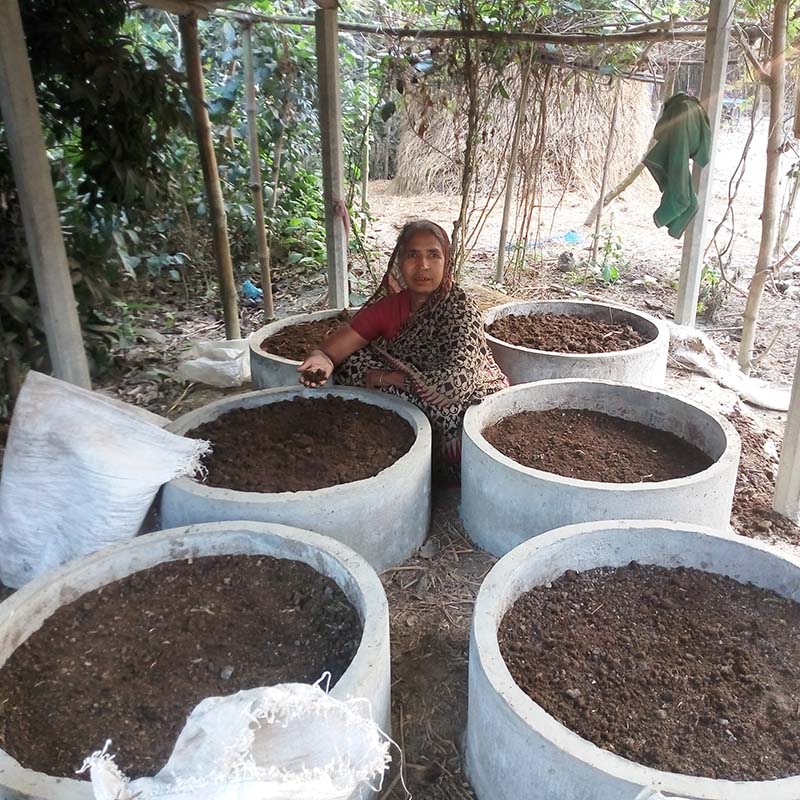
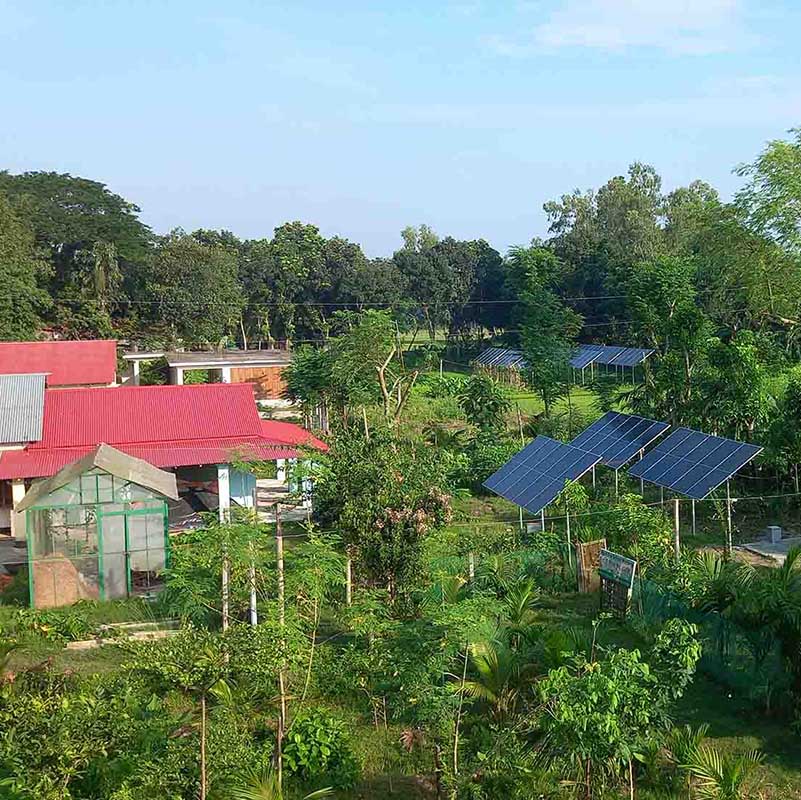
To develop & implement sustainable, locally grounded & participatory program to serve the needs of most disadvantaged & marginalized people of Bangladesh in the fields of sustainable agriculture, basic health, education in addition to skill & vocational training, resilience to disasters & climate change and economic advancement including shaping up the value chain. Gender equality, intersectionality and DO NO HARM principles have to be respected in all program design and implementation.