


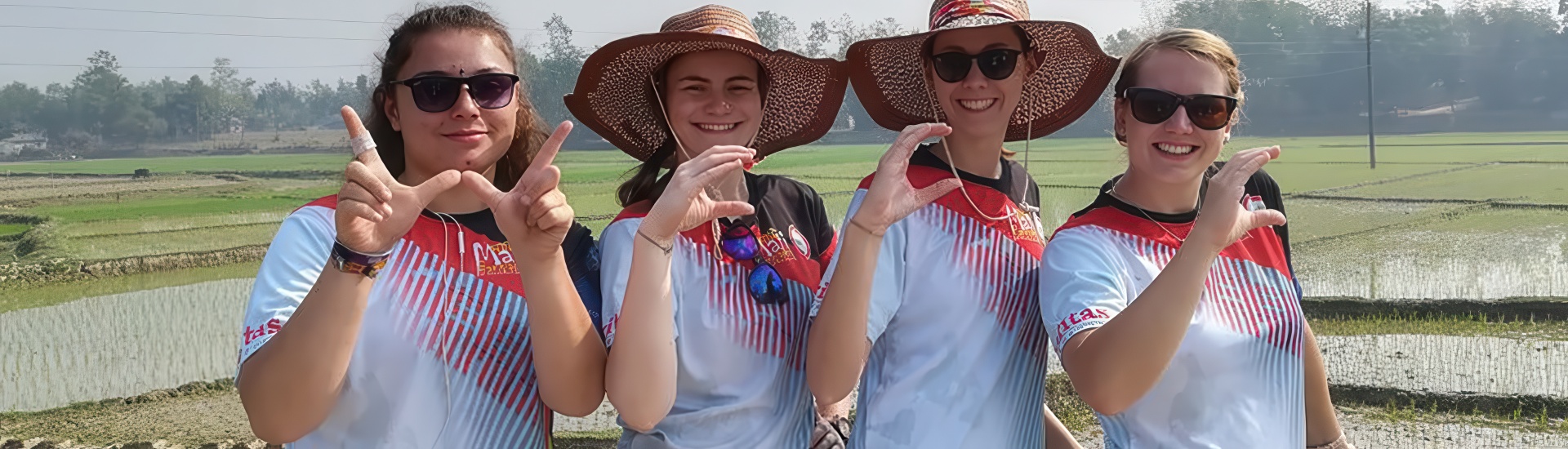
Volunteerism / Internship
Volunteers Information:
The partnership between Mati and its volunteers is built on a foundation of mutual respect and shared responsibility, where the volunteer is integrated as a strategic partner of the organization. To ensure a productive experience, Mati commits to providing comprehensive information, role-specific training, and the necessary materials required for the volunteer to fulfill their duties effectively. In return, the volunteer commits to a full-time schedule of approximately eight hours per day, adhering strictly to organizational regulations and the national laws of Bangladesh. This professional agreement also includes a mandate for confidentiality regarding sensitive data and grants the NGO the right to use media captured during their service for institutional purposes. As this is an unpaid role, the volunteer assumes full responsibility for their personal logistics, including travel and health insurance, while acknowledging the inherent challenges and risks of working in a developing country. While Mati provides a safety net by facilitating first aid or emergency assistance in critical situations, the financial burden of all medical expenses remains the sole responsibility of the volunteer.
Volunteers at Mati serve as essential pillars of the organization, operating at the intersection of strategic research and hands-on community development. Their roles are multifaceted, beginning in the office where they assist with administrative tasks and extending into the field to conduct vital data collection that informs the NGO’s decision-making. In the health sector, they provide compassionate, specialized support by assisting with physiotherapy, childcare, and general medical services, ensuring that vulnerable populations receive consistent care. Furthermore, their presence in the Mati School empowers local educators, as they support teachers to the best of their abilities and foster an engaging learning environment for students. Beyond their specific tasks, volunteers gain a profound, 360-degree view of the “NGO ecosystem,” learning to navigate the daily logistical challenges and socio-economic concerns that define the operations of a small, grassroots non-profit. This immersion transforms their service into a reciprocal journey of professional contribution and deep humanitarian insight.
The volunteer agrees to pay a 400€ fee and a 300€ deposit (refundable after completing the work properly), and an additional 100€ per month if staying more than three months. After finishing the assignment, the volunteer must submit a feedback report and register with the embassy during the stay.
As in previous years, we could rely on many pairs of additional hands who wanted to lend a hand. Here they describe in personal words how Bangladesh affects them:
Anna Schäfer (23 years old):
From January to the end of March, I will strengthen the work of the Mati team as a volunteer. I am studying social work at the Cooperative State University in Stuttgart. In my practical phases, I work in a municipal daycare center. At the moment, however, I am in my external internship here at Mati in Bangladesh, you have the opportunity to gain new experiences and insights into a different culture and different ways of working.In the last few weeks I have already experienced a lot here. Bangladesh is loud, full of people and somehow a bit crazy. The various difficult life situations and personal stories of the people never cease to impress me. For me, Bangladesh, despite the many problems and Injustices, a country full of smiles and joie de vivre. When I walk through a slum district in the evening and am invited to a house to sing and dance, I get the feeling that I am in the right place at the right time.
Hanna Friedrich (29 years old):
I am studying eco tropology in Hamburg and came to Bangladesh and Mati for four months to do research for the topic of my bachelor’s thesis in the Millennium Village. I am impressed by the cheerfulness and friendliness of the people here despite the widespread poverty and am happy that I can work and research in such a realistic way.
Christine Scheidt (41 years old):
For some time now, I had wanted to break out of my little life of prosperity and see the world with new eyes. Now I’m here in Bangladesh, for three months of volunteer work, and every minute has been worth it so far. Working for and with Mati is fun, and the organization provides the necessary support for the daily small and large cultural adventures – e.g. posting a letter at the post office, or buying a train ticket to Dhaka.But more importantly, I see the downside of our lifestyle with my own eyes, and I meet many incredibly friendly, generous (and curious) people every day. Bangladesh is rich in people, not just in numbers.
Rebecca Schwegel (20 years old):
I was in Bangladesh for 10 months as part of the Weltwärts volunteer service. I visited to interview some for the Mati’s sponsorship program. We all chew sugar cane. In the area where the widowed woman lives with her daughter, a lot of sugar cane is grown, and since I had never eaten any before, I was offered something right away. This often happens to me here in Bangladesh, that I only make a casual remark about how interesting or beautiful I find something, and immediately the wonderfully hard-working people around me try to make me happier again.
Yannick Wypiorczyk (20 years old):
During my time as a volunteer at Mati, I had a meaningful and eye-opening experience working with the local community. I helped with daily activities such as supporting the school, assisting staff in organizing tasks, and visiting villages to observe and participate in community programs. The people were very welcoming and kind, and I learned a lot about their daily lives, struggles, and strengths. Even though the living conditions were simple, the happiness and resilience of the people inspired me. This experience taught me the importance of helping others, being patient, and appreciating what we have. Volunteering at Mati was not only about giving help, but also about learning, growing, and understanding the world from a new perspective.
.
Additional Information from archive:
This is the name of the voluntary service for young people up to the age of 28 funded by the federal government. The minimum stay of Weltwärts volunteers in the host project is 6 months. The German sending organization, which takes over the intensive preparation of the volunteer and regulates all formalities, is the Nothelfergemeinschaft der Freude e.V. in Düren.
General Guidelines for the MATI – Project Areas
Dear Volunteer,
MATI is very happy about your willingness to contribute to the project and is keenly interested to establish a good relationship with you. These guidelines should give you an idea what to expect and how to prepare yourself. So please consider the following things:
I. ECOLOGY
1. We in the Mati community place a huge emphasis on ecological, sustainable living. It is an initiative of extreme importance to us, and we would ask you to support us in our efforts with all your heart. As foreigners, local people will closely follow the examples you set, so your impact in this regard can be huge. While living in the project area in Huzurikanda you will be part of a very sensitive eco-system. It is MATI’S concern to live with nature and value it as the prime source of life. So we want to keep our damaging impact on the environment as low as possible. Since there is no public recycling system, a few simple rules apply: – Separate your waste into things that are bio-degradable (kitchen waste, food leftovers, paper) and can therefore be put into the decomposing system and all other stuff that has to be burned.
– Reduce!
Please try to reduce waste by avoiding any unnecessary packaging materials. Maybe you can give this matter some thoughts even before coming here, so that you leave all unnecessary plastic wrappings at home. Please notice that it is common practice in the project area not to bring plastic bags from the markets, follow this example and carry your own cotton bags. If you cannot avoid plastic waste, bag it up and carry it with you to Mymensingh where it can be sold to recyclers. If you bring batteries, please do not throw them into the rubbish here, they are hazardous for the ground water, rather take them back home with you, where a proper recycling system exists. Try to use rechargeable batteries (akkus), which you have to bring from Germany.
– Reuse:
Do not always buy a new water bottle, rather fill up used ones with water from the pump.
2. The water from the toilet will be cleansed and filtered in the project’s own water purification system, however, all other dirt water will go directly into the ground. We are aware that this is a problem and are thinking about solutions, in the meantime it just means we have to make sure to keep the harmful effort on the soil as low as possible. Lots of shampoos/soaps/chemicals contain biologically un-degradable ingredients, such as particular tensides. So please do consider what you are bringing with you. In Germany –unlike in Bangladesh- there are lots of environment friendly products available, so if you buy any cleaning fluids or washing powders, take brands like Frosch or Ecover etc…The same applies for your personal cosmetic needs, brands like Weleda or Alverde (dm) follow an environment-sensitive philosophy. Rinse the toilets and sinks with water directly after use, so we don’t have to use chemicals to clean them later on.
Save water! Use the bucket system to flush the toilets, and turn of the taps while brushing your teeth, doing the dishes etc.
II. PERSONAL CONDUCT
1. You will be living in the project’s guesthouse, which is considered as your personal space and allows you to get some time to yourself. While staying in the project it will therefore also be your responsibility to keep it tidy and clean.
2. In Mymensingh you can use the washing machine for 50Tk per load, in Huzurikanda you can either wash your clothes by hand yourself, or hand them over to one of the women who will wash them for you, but should be paid 50 Tk/ per load for this service (No underwear please).
3. The food in the project will be simple but nurturing. Dishes consist mainly of various fruits, vegetables and dhals, alongside rice and potatoes. Meat will be served only occasionally. If the quantity of the food offered is not sufficient, please tell us, so we can arrange more. Be sensitive with food, never throw food away, remember, that you are living among people who often go hungry.
4. You will be living in a predominantly Muslim village area. In Muslim societies the consumption of alcohol is considered inappropriate. Please be sensitive and respect people’s feelings in this regard. We would ask you not to drink any alcohol while staying in the project in Huzurikanda. There will be other opportunities where drinking won’t cause any ill feelings.
5. As far as smoking is concerned, our project area is a smoke-free zone, this means smoking is not allowed and there are no exceptions made. Please be especially sensitive not to smoke in front of children, and do not encourage smoking when being together with locals. Set an example!
6. Considering clothes, this is just a short reminder, that the clothes you bring from home should meet certain requirements. In general, with regard to Muslim sense of decency, but also with regard to practical matters such as climate, we advise you to wear lose-fit trousers or long skirts (if you like) and shirts. Anything showing naked shoulders, or legs should be avoided, belly-free is also a no-no. Long sleeves are useful in the evening hours as protection against the mosquitoes. A warm sweater or jacket is also a good idea, especially during the winter season (November – March) evenings can get a bit chilly.
A pair of sandals or slippers and a pair of more solid boots will also prove useful. Your clothes should be simple, but clean and nice, since outer appearance is noticed in BD.
7. You will notice soon enough that relationships in Bangladesh differ from Europe on all levels. There is a great respect for authorities, so always be respectful. The family is of high value. Furthermore, while all our staff have a friendly demeanors amongst each other, males and females do not touch openly. You can have good friendships with the opposite sex, but please be aware of the limits. When dealing with locals, this means also that you don’t take a person of the opposite sex into your room with you or stay out late at night with them, if you are not in a group of people. Westerners are often perceived as people with lose morals in Islamic countries, please do your utmost not to support this viewpoint. You should also keep out of discussions on sexual topics, even though people might be curious. But no matter what you say, people will never understand your cultural background, and therefore there is a high risk, that they get it all wrong. The common situation in Bangladesh is that people get married early, hardly have boyfriends or girlfriends before marriage, and stay together with one partner for life. Anything else, even though it exists, is considered as not really appropriate, especially not for women. If you adhere to a few simply rules, you will most likely not encounter any problems in Bangladesh, but on the contrary, you will be warmly received everywhere you go, and soon enough feel a part of the community as much as anyone else, and very likely be sorry when it is time to leave again.
FINAL NOTE:
If there are any problems, no matter whether personal or professional, please come and talk to us immediately, so we can find a solution.