


Join our Campaign
ANNUAL CLIMATE AWARENESS CAMPAIGNS (Cycle Campaign)
Organization: MATI Bangladesh
Region: Greater Mymensingh Division, Bangladesh
Reporting Period: 2018–2019 Cycle
Theme: “We Control Climate Change – Cycling for a Better Climate”
 1. Executive Summary
Bangladesh remains one of the most ecologically challenged nations globally due to its unique deltaic geography and high vulnerability to rising sea levels and extreme weather patterns. In response, MATI Bangladesh has spearheaded a grassroots movement in the Mymensingh division to transition from climate awareness to climate action.
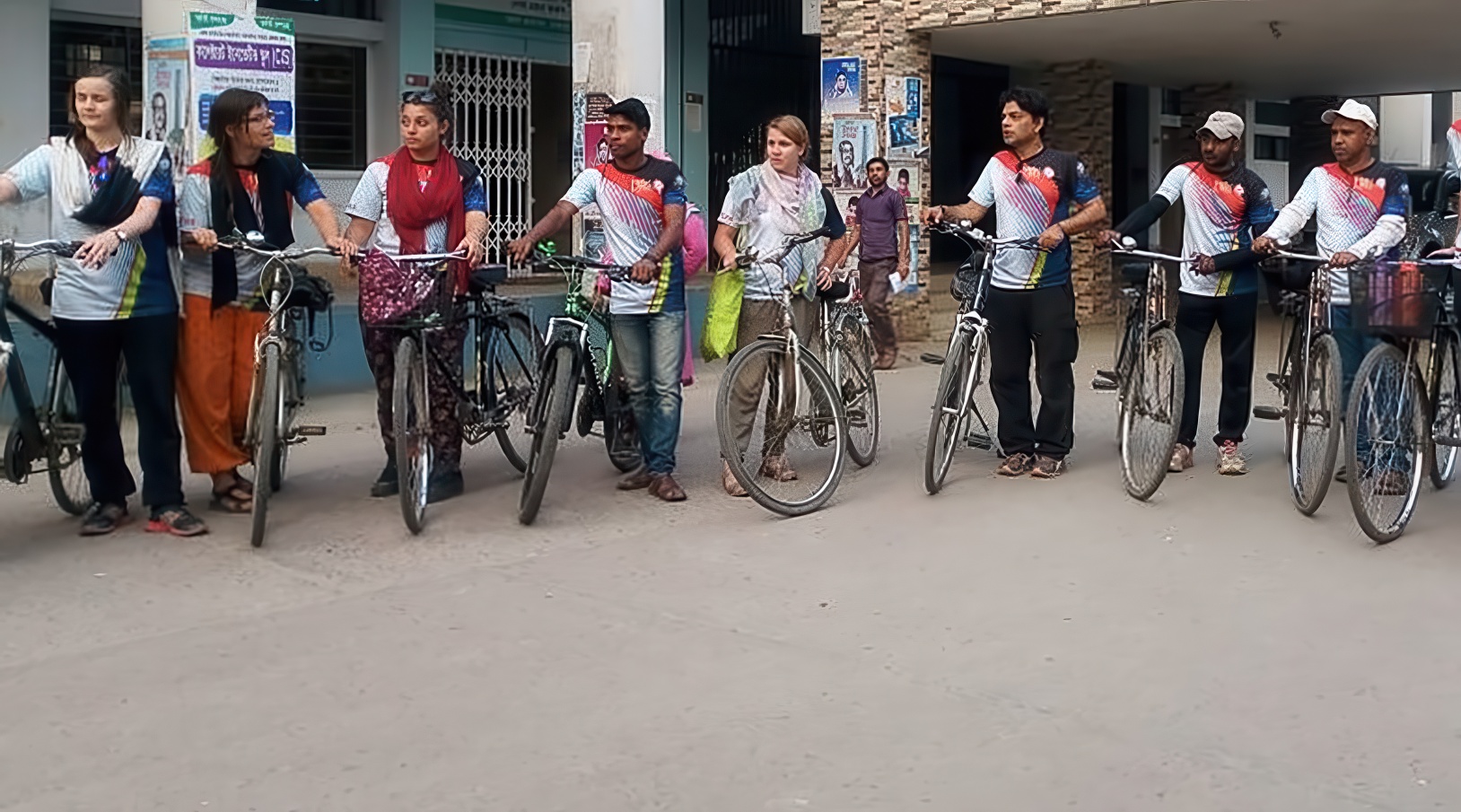
Through the “Annual Campaign Week on Climate Change,” MATI has successfully mobilized a “Climate Fighter” network consisting of staff, NGO partners, and hundreds of student volunteers. This report details the methodology and impact of the signature multi-day cycling rallies conducted in 2018 and 2019, which served as the primary vehicle for regional environmental diplomacy.
 2. Regional Context and Vulnerability
The Mymensingh division, while inland, faces significant threats from erratic rainfall, flash floods, and agricultural disruptions. MATI’s strategy leverages the region’s awareness of these vulnerabilities to build a localized defense. By focusing on the “Greater Mymensingh” area, the organization ensures that climate education is culturally and geographically relevant to the local populace.
3. Campaign Methodology: The Cycling Rally
The choice of a bicycle rally as the primary medium of advocacy is both symbolic and practical. As a zero-emission mode of transport, the bicycle represents the sustainable future the campaign promotes.
A. The 2018 Campaign (Feb 26 – March 5)
• Scope: A 5-day journey covering approximately 220 km.
• Reach: 4 Districts and 5 Upazilas.
• Participation: 19 dedicated cyclists.
• Focus: Establishing the initial “Climate Fighter” identity and linking rural schools with district administration offices.
B. The 2019 Campaign (Feb 11 – Feb 16)
• Scope: A 5-day journey covering approximately 187 km.
• Reach: 4 Districts and 5 Upazilas.
• Participation: 13 specialized cyclists.
• Focus: Deepening institutional ties and reinforcing the slogan “We Control Climate Change.”
4. Strategic Engagement Pillars
The success of these campaigns is rooted in three distinct levels of engagement:
I. Educational Outreach (Schools & Colleges) Campaigners conducted town-hall style discussions at educational institutions. By targeting the youth, MATI is cultivating a generation of “Climate Guides” who can carry the message of sustainability back to their households.
II. Administrative Advocacy (Local Government) The rallies concluded or paused at local government and administration offices. These meetings served to remind policymakers that climate resilience must remain a priority in local development budgets and disaster management planning.
III. Community Mobilization (The NGO Network) MATI did not act in isolation. By partnering with a broad network of NGOs, the campaign ensured that the message was amplified across different sectors of civil society, creating a unified front against environmental degradation.